Monthly newsletter
QUICK INTRO – WHAT'S RTC.ON NEWSLETTER ABOUT?
Each month, our team will get together and give you a selection of multimedia dev content. Some of it will be useful links, some will be interesting events to have an eye on, some will be mini-articles and commentary on what's .ON in the WebRTC world. Grab yourself a coffee (or any drink of preference), sit back & enjoy the next edition of RTC.ON Newsletter – we hope you'll like it!
Monthly newsletter
MUST-READS IN MULTIMEDIA
Hi, I am Radek, and I primarily work on real-time multimedia processing in Software Mansion focusing on creating scalable cloud infrastructure, WebRTC recordings and SIP.
Let's see what exciting news from the multimedia world I've found for the second edition of the RTC.ON newsletter!
MUST-READS IN MULTIMEDIA
MLow: Meta’s low bitrate audio codec
The main goal of creating a new audio codec by Meta was to achieve better audio quality in poor network conditions without increasing the computational cost. After two years of work, Meta developers created a codec that achieved two times better quality than Opus while keeping computational complexity 10% lower than Opus.
WebRTC plumbing with GStreamer
This article is a great place to start if you want to learn more about WebRTC in GStreamer. It briefly explains what GStreamer is and gives a background about how WebRTC was added to it, what projects are using it for handling WebRTC, and what features of WebRTC are implemented.
The beginning of work on SDP offer/answer for RTP over QUIC (RoQ)
This information moves us one step closer to using QUIC in the multimedia world. In addition, using well-known protocols like SDP makes it easier for new people to understand and adopt QUIC. New to multimedia in QUIC? Take a look at MoQ blog or Mike English YT playlist.
What is DRM?
If you've wondered how streaming services protect themselves against piracy or if you've heard about DRM but wanted to deepen your understanding, this article is a great resource. Do you want to learn more about the history of fighting against piracy? In that case, you should watch Javi B'stalk at this year's JanusCon.
Video annotator: a framework for efficiently building video classifiers using vision-language models and active learning
As we all know, AI/ML is revolutionizing the world. AI models require a substantial amount of data, particularly labeled data. Data labeling can be time-consuming and challenging. Netflix has addressed this issue by developing an additional AI model, as outlined in this blog post.
What is perceptual quality?
Learn from Mux why we encode video and audio, and why we need tools to measure differences between raw and encoded video.
New chrome devtools
The feature for which whole generations of WebRTC developers were waiting arrived: no more alternating the connection on the machine. Chrome dev-tools finally support UDP throttling!
A Novel DoS Vulnerability affecting WebRTC Media Server
This news is a good reminder to regularly update software to the newest versions, as updates often fix not only bugs but also security vulnerabilities. Many popular media servers released security fixes for this vulnerability e.g.: Asterisk, FreeSWITCH, RTP Engine)
Bonus: new open source contributions:
- Lorenzo Minero open-sourced the NDI plugin to Janus
- Werner Robitza created a tool for streaming HLS via a local host with optional network throttling
- Sean DuBois created a PR to the OBS that adds support for simulcast
11 RESOURCES THAT WILL HELP YOU START WITH WEBRTC
Hi, I am Michał and I work with the Membrane Team creating WebRTC dev solutions.
I remember when I tried to understand why we actually need transceivers, why can’t we just operate on tracks. This was a massacre. Because of that, I wrote a short blog post collecting a couple of resources that helped me a lot in understanding how WebRTC really works.
WHAT'S NEW IN SOFTWARE MANSION
At Software Mansion, we keep up the work on improving our open-source libraries and creating new ones. Here are some of the recent releases:
ExVision
What do you get when you mix Elixir with some AI? Meet ExVision – an Elixir library with real-time AI models included and ready for use. The goal of the library is to provide ready-to-use computer vision models capable of low latency processing in just a couple of lines of code. Read up more here & learn how we make it work!
Real-time video inpainting
Starting this year, we released an inhouse AI model for removing objects in real time from a video stream. The solution involves not only the inpainting model but also multiple clever optimization & software innovations allowing to decrease bandwidth usage while at the same time increasing GPU utilization up to 95%! Check out the demo here.
ElixirWebRTC 0.3.0
A new version of Elixir WebRTC just landed. For the past two months we were focused on: adding support for inbound simulcast, improving PeerConnection’s configuration API, and improving Broadcaster - our simple WHIP/WHEP streaming server. We also dove a little bit into benchmarks and profiling. The full roadmap is available here.
Fishjam Cloud
We are excited to announce launching Fishjam Cloud a platform that combines years of experience building multimedia solutions, web and mobile apps. Our goal is to lower the bar for building real time communication based products especially for small and medium companies.
Using Fishjam Cloud it simply takes a couple of clicks to launch multimedia infrastructure and a few lines of code to have an up and running application that contains video chat. Currently we are preparing for the early access phase so if you are interested in participating please sign up to discuss your use case.
Working on a high-level, declarative API over Membrane
Membrane heavily utilizes pipelines, which are a quite powerful tool for describing media processing flows. However, building pipelines can be challenging, as you need to know exactly how the processing should look like. This is not obvious oftentimes and thus increases the entry level of the framework. To aid that, we're working on a high-level API that accepts only inputs and outputs and builds a proper pipeline under the hood. For example, a basic pipeline for RTMP to HLS conversion is now ~60 lines of Elixir code (see the demo). However, it could fit in a single line, like stream(input: rtmpsocket, output: "hlsplaylist.m3u8"). That's what we're aiming for! We hope it's enough for simple use cases and can serve as a starter or a building block for more complex ones. If you have any comments or would like to become an early adopter, please let us know by DMing Mateusz on X, via our Discord channel or via [[email protected]](/cdn-cgi/l/email-protection#8ae9e5e4feebe9fecae7efe7e8f8ebe4efa4f9fef8efebe7).
WHAT EVENTS ARE .ON
RTC.ON 2024 – SEPT 11-13, KRAKÓW, POLAND
RTC.ON website | Tickets
This year’s edition is coming closer and closer – we’ve just finalised our CFP and are working on the conference lineup right now!
Before we make 2024 agenda announcements, we’ve prepared a recap of top 3 most-watched talks from last year’s edition. Enjoy!
P.S. Early Bird pricing is now .ON – a limited number of tickets are available, so make sure to grab yours before they’re gone. Use codeRTCON-NEWS to get extra 15% off all tickets. The code is available until Friday, July 5!
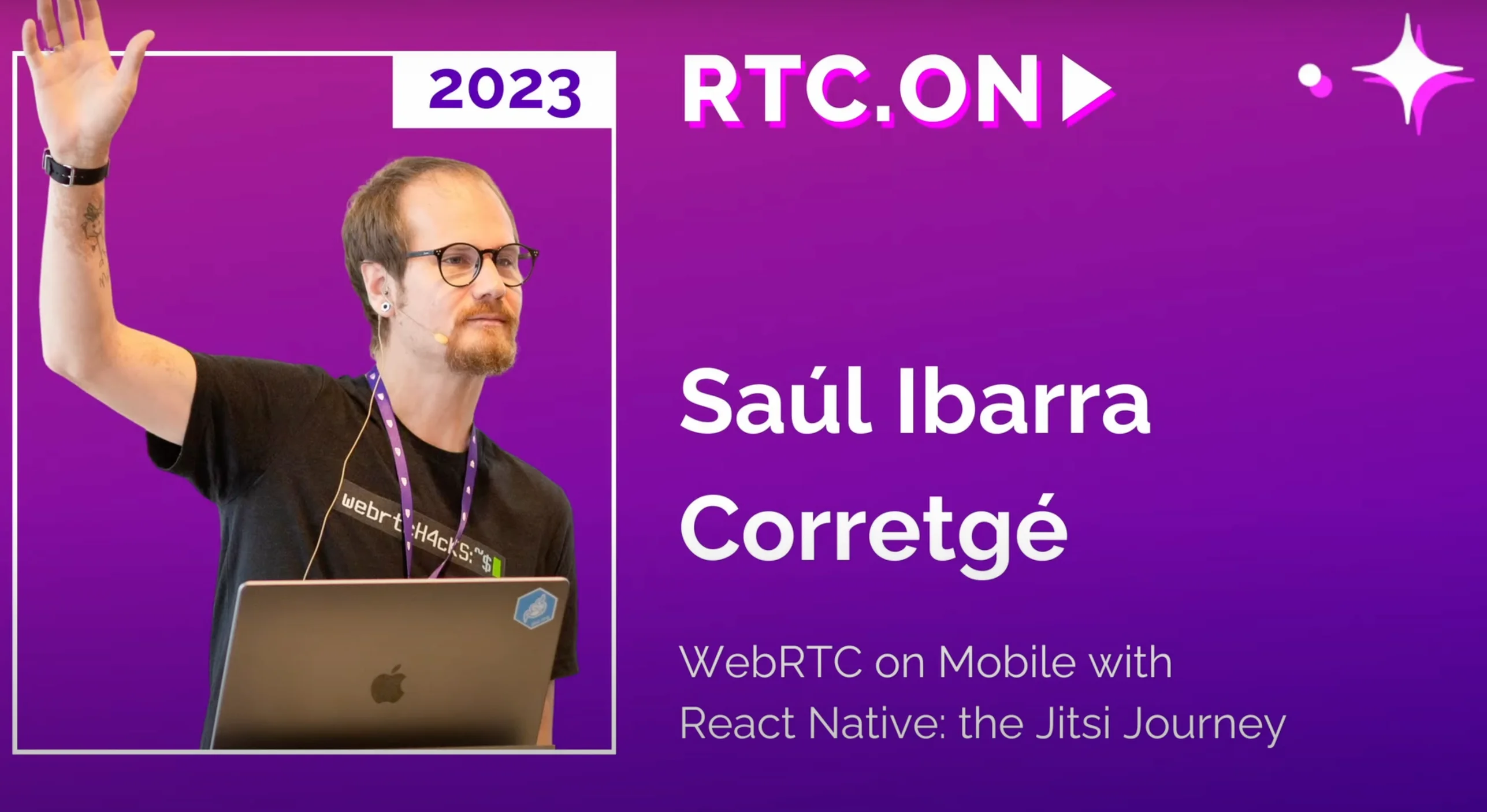
WebRTC on Mobile with React Native: the Jitsi Journey
Saul Ibarra Corretgé
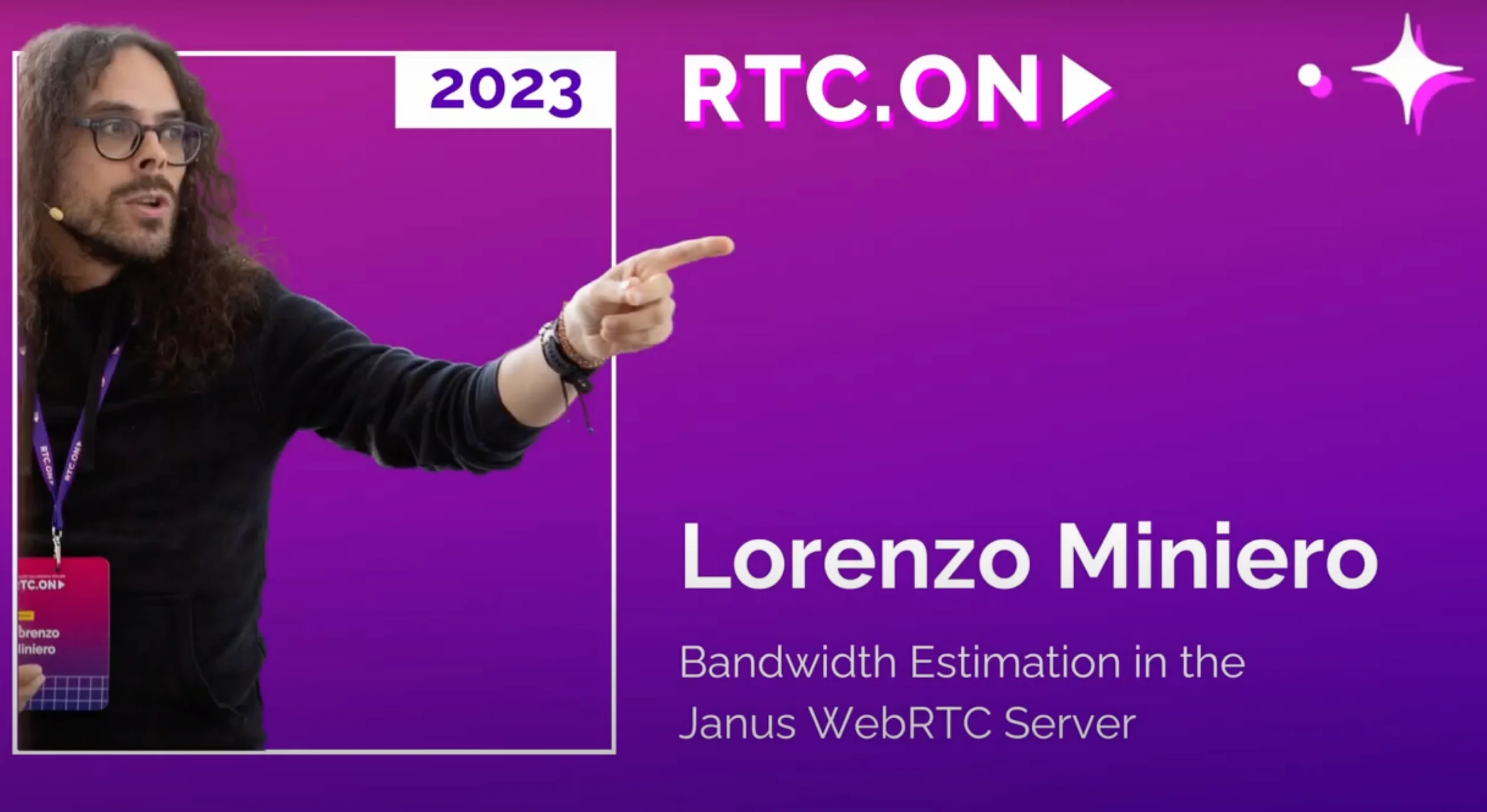
Bandwidth Estimation in the Janus WebRTC Server
Lorenzo Miniero
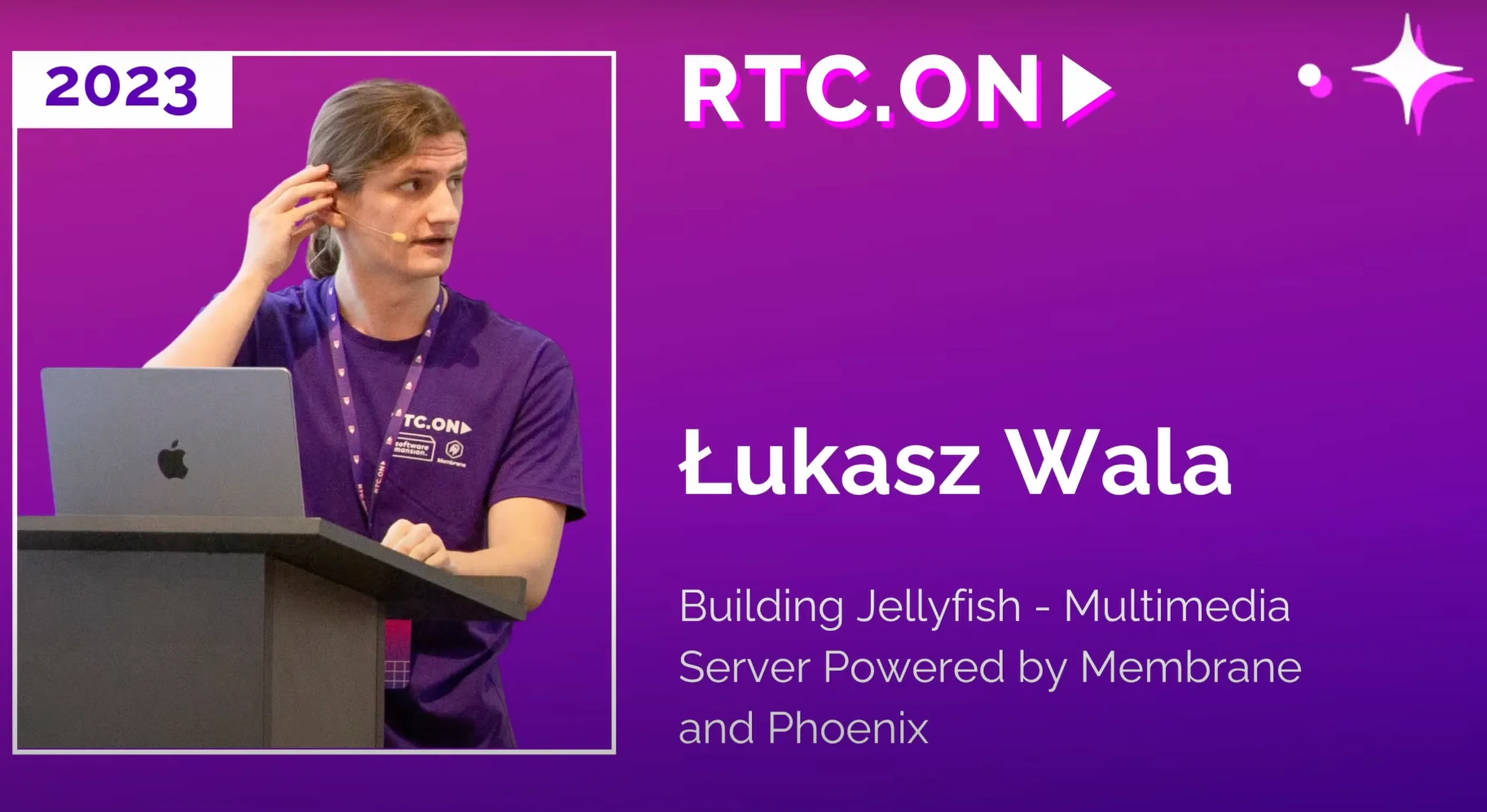
Building Jellyfish: Multimedia Server Powered by Membrane and Phoenix
Łukasz Wala
COMMCON LONDON & COMMCON SAN FRANCISCO RECAP
CommCon 2024 website
CommCon was like no other – with not one, but two locations!
In London, Michał Śledź did a deep dive into ElixirWebRTC, where he talked about what the team managed to achieve during 1 year of working on it. If you haven’t heard of Elixir WebRTC yet, it’s an open-source, W3C compliant implementation of WebRTC written in pure Elixir – here you can learn a bit more about it!
For the San Francisco edition, we’ve had two speakers from the Membrane Team. Przemek Rożnawski gave a talk on building Jellyfish media server (now Fishjam Cloud). Watch the presentation & learn how we took advantage of Elixir’s features & developed a video streaming solution that balances a simple API with advanced capabilities.
The San Francisco stage also took in Wojtek Barczyński, who talked about WebRTC track mixing for streaming & recording. Wojtek analyzed currently available tools for composing live streams & explained why (and how) we created an open-source media server for doing that in real time - LiveCompositor. Speaking of LiveCompositor – we’ve just recently released a stable version, make sure to check it out!
Thank you CommCon, it was great to be a part of the events this year. We can't wait for what's to come in 2025!
Thanks for making it this far! Happy streaming :)
RTC.ON is created by
Zabłocie 43B
30-701 Kraków



You received this email because you signed up on our website or made a purchase from us.
Unsubscribe